A growing number of people are realizing how interrelated many academic areas are in today’s quickly changing educational environment. In elementary education, integrating STEM (science, technology, engineering, and mathematics) and literacy is a potent strategy that fosters comprehensive learning and improves comprehension. Through the integration of STEM (science, technology, engineering, and math) with literacy (reading, writing, and communication), educators can create a dynamic learning environment that better equips children for the future. In this blog, we’ll discuss the advantages of combining STEM and literacy and offer useful implementation ideas for elementary school teachers.
The Benefits of Integrating STEM and Literacy
For primary school pupils, there are several benefits to combining STEM with literacy. It first produces a more interesting and significant learning environment. Students are more likely to remember material and have a deeper understanding when they can relate scientific concepts to tales, articles, or real-world situations.
Second, incorporating literacy into STEM subjects enhances students’ ability to communicate. Students must communicate their ideas clearly, give reasons for their decisions, and work cooperatively with classmates when working on STEM projects. This encourages the growth of critical oral and written communication skills, which are necessary for success in any area.
Finally, this connection encourages problem-solving and critical thinking. Teachers foster critical and creative thinking in their pupils by promoting reading, analyzing, and discussing scientific ideas. This helps students become better problem solvers.
Practical Strategies for Integrating STEM and Literacy
To successfully integrate STEM and literacy, teachers need effective strategies that are both engaging and manageable. Here are some approaches to consider:
Use Storytelling to Introduce STEM Concepts
A great strategy for holding young students’ attention is storytelling. To teach STEM topics, educators can utilize kid-friendly tales or literature with a scientific or technical background. A tale about a bunch of kids building a bridge, for instance, can be used to teach engineering concepts and problem-solving techniques.
Incorporate Reading and Research in STEM Projects
Motivate students to conduct research on subjects linked to their STEM projects. This may entail looking through internet resources, viewing instructional videos, or reading publications. Through the integration of reading and research, students enhance their literacy abilities and get a deeper comprehension of the STEM ideas being studied.
Encourage Writing and Reflection
Since writing is an essential part of literacy, including it in STEM projects can improve student learning. Encourage your kids to keep a science notebook in which they can record their observations, experiments, and reflections. Students are encouraged to successfully convey their views while also being reinforced in scientific topics through this exercise.
Promote Collaboration and Communication
STEM endeavors frequently need cooperation and communication. Students should be encouraged to work in groups and report back to the class on their findings. Students benefit from increased collaboration as well as improved communication and public speaking abilities.
Conclusion
Including STEM and literacy in elementary school is a game-changing strategy that helps instructors and children alike. Teachers may build a learning environment that encourages curiosity, critical thinking, and effective communication by fusing the practical, exploratory aspect of STEM with the analytical and communication abilities learned via reading. Teachers have the power to motivate the next generation of scientists, engineers, and communicators by using effective integration tactics.
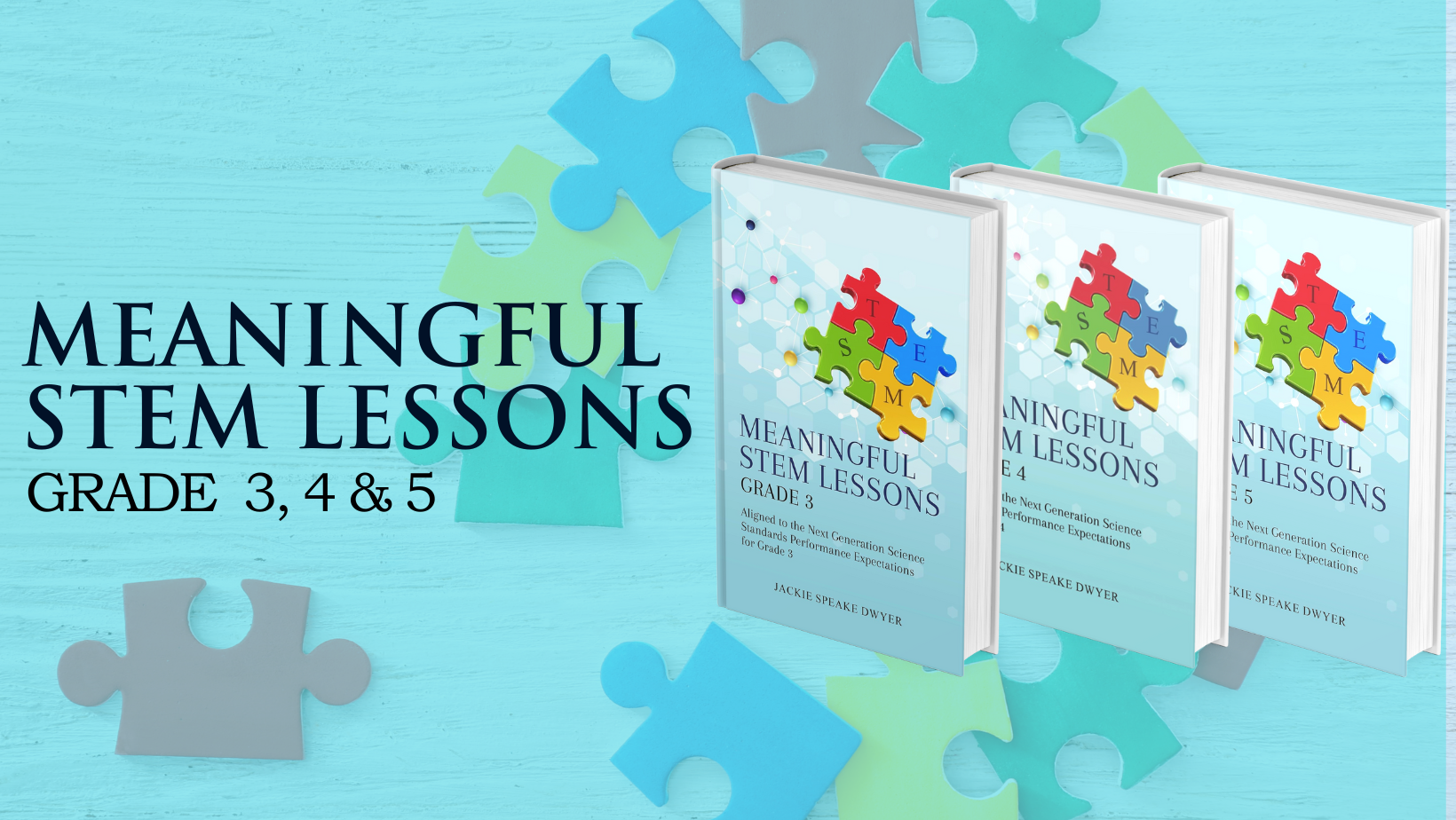
Discover the transformative potential of Meaningful STEM Lessons Grade 3 by Jackie Speake Dwyer. Seamlessly integrating STEM and literacy, this book offers ready-to-use lessons designed to foster critical thinking, communication, and teamwork among students. Aligned with the 5E Instructional Model and NGSS, these lessons ignite curiosity and deepen understanding of science concepts. Don’t miss the chance to revolutionize your classroom. Get your copy of Meaningful STEM Lessons Grade 3 today from here: https://amz.run/9BwZ and embark on a journey of engaging inquiry-based learning. Additionally, explore Meaningful STEM Lessons Grade 4 from here: https://amz.run/9Cqh and Meaningful STEM Lessons Grade 5 from here: https://amz.run/9Cqh to expand your repertoire of innovative teaching resources.